Choosing the right hardware wallet requires understanding what each device offers—and where it falls short. This ledger wallet review provides honest, detailed analysis of the ledger wallet nano x and ledger wallet nano s plus, alongside premium options. From physical construction to daily usability to long-term value, find the objective information you need to select the device matching your requirements. Once you've chosen your device, follow our download guide and setup instructions to get started.
Ledger Hardware Wallet Lineup Overview
Evolution of the Product Line
Ledger's hardware wallet journey began in 2014 with the original Ledger Nano, establishing the compact USB form factor that became industry standard. The Ledger Nano S (2016) became the best-selling hardware wallet in history. The Ledger Nano X (2019) introduced Bluetooth connectivity and mobile compatibility. The Nano S Plus (2022) modernized the entry-level offering. Premium touchscreen devices Stax and Flex (2023) expanded the lineup upward.
Today's choices span $79 to $399, addressing different user priorities from budget to premium.
Common Security Foundation
Every current Ledger device shares the same fundamental security architecture, regardless of price.
Certified secure elements using ST33 series chips with CC EAL5+ or EAL6+ certification protect all models. Private keys generate inside these chips during setup and never leave. Transaction signing occurs entirely within the secure element. Physical tamper resistance defeats laboratory-level attacks.
Price differences reflect features and form factor—not security levels. The $79 Nano S Plus provides equivalent cryptographic protection to the $399 Stax.
Ledger Wallet Nano S Plus: Detailed Assessment
The ledger wallet nano s plus represents Ledger's entry-level offering at $79, designed for desktop-focused users prioritizing value.
Physical Design
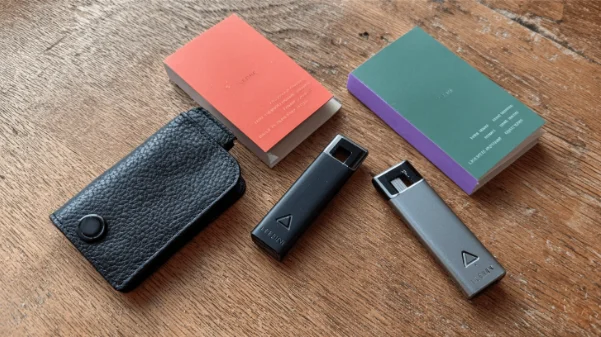
The Nano S Plus maintains Ledger's established compact form factor. Dimensions measure 62.39mm x 17.4mm x 8.24mm—roughly the size of a USB flash drive. Weight is minimal at 21 grams, barely noticeable in a pocket or on a keychain.
Construction combines brushed stainless steel with matte plastic in a professional, understated aesthetic. A rotating cover protects the USB-C port when not in use, adding durability for daily carry.
The 128x64 pixel OLED display presents sharp text for transaction verification. Two physical buttons positioned near the screen enable navigation and confirmation.
Technical Specifications
The secure element carries CC EAL6+ certification—the highest among current Nano devices, paradoxically exceeding the more expensive Nano X.
USB-C connectivity provides modern, reversible connection compatible with current computers and Android phones via USB OTG. No Bluetooth exists; no battery exists. The device draws power from USB when connected.
Storage capacity of 1.5MB supports 100+ cryptocurrency applications simultaneously—a massive improvement over the original Nano S's limited capacity.
Support covers 5,500+ coins and tokens across 500+ blockchain applications.
User Experience
Daily use reveals both strengths and limitations of this ledger wallet review subject.
Setup proceeds smoothly through Ledger Wallet's guided process. Two-button navigation requires learning but becomes intuitive quickly. Transaction verification displays recipient address and amount clearly on the trusted screen.
The primary limitation is desktop dependence. Without Bluetooth, the Nano S Plus requires USB connection for every interaction. Mobile use is possible only on Android via USB OTG cable—iPhone users cannot connect at all due to Apple's restrictions.
For users who manage cryptocurrency primarily from desktop computers, this limitation rarely matters. For those expecting mobile management, it's disqualifying.
Value Proposition
At $79, the Nano S Plus delivers exceptional security-per-dollar. You receive bank-grade certified secure element protection, modern USB-C connectivity, capacity for diverse portfolios, and full Ledger Wallet ecosystem access.
Trade-offs accepted include no Bluetooth convenience, no iOS compatibility, no battery for standalone operation, and no touchscreen interface.
For budget-conscious users comfortable with desktop management, the Nano S Plus represents optimal value.
Ledger Wallet Nano X: Comprehensive Evaluation
The ledger wallet nano x at $149 serves as Ledger's flagship Nano device, targeting mobile-focused users and iPhone owners.
Physical Design
The Nano X presents a slightly larger form factor than its sibling. Dimensions measure 72mm x 18.6mm x 11.75mm with weight at 34 grams—still pocket-friendly but noticeably heavier than the S Plus.
Construction quality matches the S Plus with brushed stainless steel and matte plastic. The rotating cover protects the USB-C port. The 128x64 pixel OLED display matches the S Plus specification.
Button placement shifts slightly but functionality remains identical for navigation and confirmation.
Technical Specifications
The secure element carries CC EAL5+ certification—paradoxically lower than the newer Nano S Plus's EAL6+. Practical security implications are minimal, but technically the cheaper device has higher certification.
Bluetooth 5.0 LE connectivity enables wireless operation with iOS and Android devices. This defines the Nano X's primary value proposition—mobile freedom.
A built-in 100mAh battery provides approximately 8 hours of active Bluetooth use. Standby time extends to several months. The battery enables portable operation without power cables.
USB-C connectivity remains available for desktop use and battery charging.
Storage capacity of 2MB supports 100+ applications—marginally more than the S Plus but functionally equivalent.
User Experience
This ledger wallet review finds the Nano X excels in mobile scenarios.
Bluetooth pairing through Ledger Wallet mobile app proceeds smoothly after initial setup. Wireless transaction signing eliminates cable fumbling. Battery life covers typical usage patterns—charge weekly under normal circumstances.
The crucial capability is iOS support. Because Apple restricts USB data from hardware wallets, Bluetooth is the only way to connect any Ledger device to iPhone. For iPhone owners, Nano X (or premium devices) is required, not optional.
Android users gain Bluetooth convenience but technically have USB OTG as an alternative.
Desktop use works identically to the Nano S Plus via USB-C connection.
Value Proposition
At $149, the Nano X's value depends entirely on whether you need its key features.
For iPhone users: The $70 premium over Nano S Plus is essential—there's no alternative for iOS connectivity. The question becomes Nano X versus premium touchscreen devices, not Nano X versus S Plus.
For Android mobile users: The premium buys Bluetooth convenience. Whether wireless operation justifies $70 extra depends on how frequently you transact away from desktop.
For desktop-only users: The Nano S Plus offers equivalent security (actually higher EAL certification) at $70 less.
Trade-offs include higher price for Bluetooth convenience, battery that degrades over years (lithium batteries lose capacity), slightly lower EAL certification than S Plus, and no touchscreen despite higher price.
Premium Options: Flex and Stax
Beyond the Nano lineup, Ledger offers touchscreen devices for premium experiences.
Ledger Flex ($249) bridges Nano and flagship. The 2.8" color touchscreen eliminates button navigation. Bluetooth 5.2 enables mobile connectivity. Qi wireless charging adds convenience. CC EAL6+ certification matches the Nano S Plus.
Ledger Stax ($399) represents Ledger's premium flagship. The 3.7" curved E Ink touchscreen—similar to e-readers—provides distinctive display technology. NFC capability enables tap interactions. Customizable lock screen displays your favorite NFT. Magnetic backing enables stacking multiple devices.
Both premium devices provide identical security to Nano models. The premium buys interface improvements, aesthetic differentiation, and convenience features—not enhanced protection.
Complete Device Comparison Matrix
| Specification | Nano S Plus | Nano X | Flex | Stax |
|---|---|---|---|---|
| Price | $79 | $149 | $249 | $399 |
| Secure Element | CC EAL6+ | CC EAL5+ | CC EAL6+ | CC EAL6+ |
| Display | 128x64 OLED | 128x64 OLED | 2.8" color touch | 3.7" E Ink touch |
| Connectivity | USB-C only | USB-C + Bluetooth | USB-C + Bluetooth | USB-C + Bluetooth + NFC |
| Battery | None | 100mAh (~8 hrs) | 200mAh (~10 hrs) | 200mAh (~10 hrs) |
| iOS Support | No | Yes | Yes | Yes |
| Best For | Desktop users, budget | Mobile users, iPhone | Touchscreen preference | Premium, collectors |
Making Your Decision
Budget-Conscious Buyers
The Nano S Plus at $79 provides the highest security certification (EAL6+) at the lowest price. If you primarily use cryptocurrency from a desktop computer and don't need mobile access, this device offers unbeatable value.
Recommendation: Choose Nano S Plus if budget matters and desktop management suits your workflow.
Mobile-Focused Users
Your operating system determines your options.
iPhone users have no choice—only Bluetooth devices work with iOS. The Nano X at $149 is the most economical iPhone-compatible option. Premium devices (Flex, Stax) offer enhanced interfaces at higher prices.
Android users can technically use Nano S Plus via USB OTG, but frequent mobile transactions benefit from Nano X's Bluetooth convenience.
Recommendation: iPhone owners must choose Nano X minimum. Android users should choose Nano X if mobile convenience justifies $70 premium.
Premium Seekers
If budget isn't constraining, Flex and Stax offer modern touchscreen interfaces with enhanced user experience.
Flex at $249 provides touchscreen without flagship pricing. Stax at $399 offers distinctive E Ink display and premium aesthetics.
Neither provides enhanced security—the premium buys interface and design, not protection.
Recommendation: Choose Flex for touchscreen preference at moderate premium. Choose Stax if aesthetics and distinctive design matter to you.